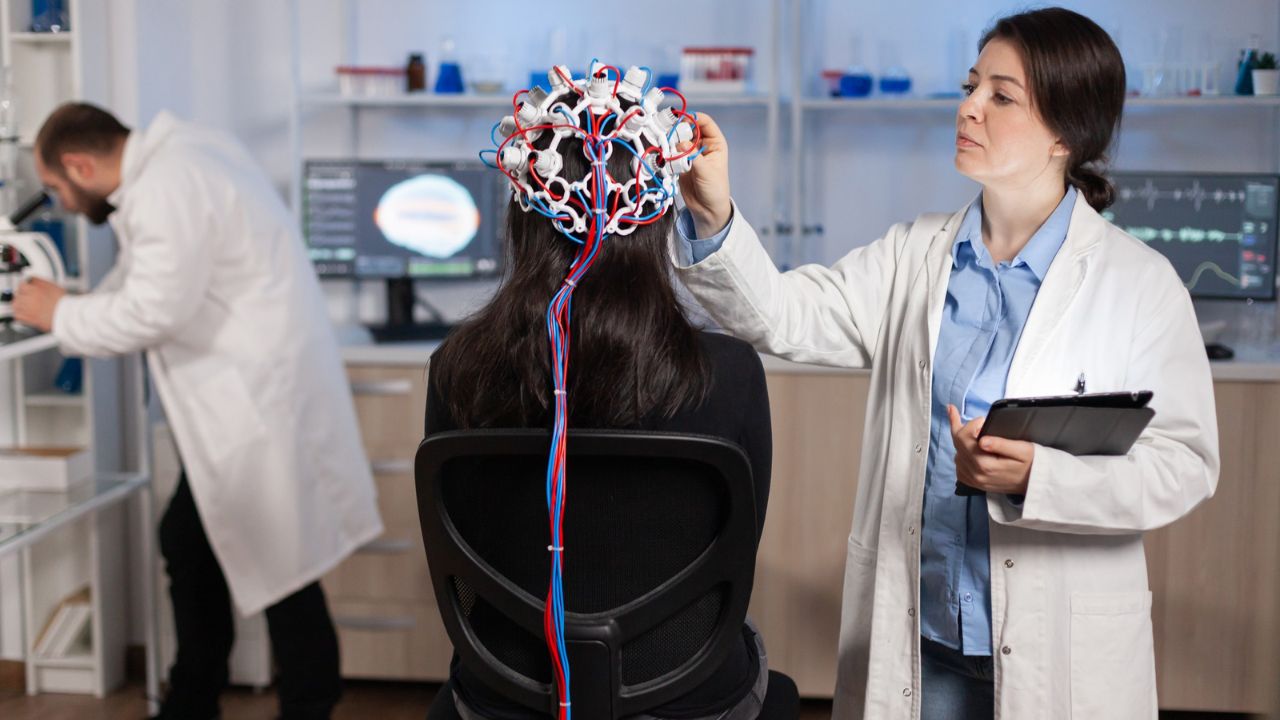
Cognitive neuroscience seeks to understand how the brain enables thinking, memory, emotion, perception, and behavior. To explore these complex mental processes, researchers rely heavily on brain imaging techniques that allow them to observe the brain’s structure, activity, and chemistry—often in real time and without invasive procedures. Over the past few decades, advances in brain imaging have transformed cognitive neuroscience from a largely theoretical field into a data-driven science.
Below are the key brain imaging techniques most commonly used in cognitive neuroscience research, along with what each contributes.
1. Magnetic Resonance Imaging (MRI)
What it measures:
Brain structure and anatomy
MRI uses strong magnetic fields and radio waves to produce high-resolution images of the brain’s physical structure. In cognitive neuroscience, MRI is essential for:
- Mapping brain anatomy
- Measuring gray matter and white matter volume
- Identifying structural differences linked to cognition, learning, or disease
Researchers often use structural MRI as a foundation, overlaying functional data from other techniques to see how brain structure supports mental processes.
Why it matters:
MRI helps identify which brain regions are involved in cognition and how structural differences relate to intelligence, memory, aging, or neurological conditions.
2. Functional Magnetic Resonance Imaging (fMRI)
What it measures:
Brain activity via blood oxygen levels (BOLD signal)
fMRI is one of the most widely used tools in cognitive neuroscience. It tracks changes in blood flow and oxygenation that occur when specific brain areas become active during tasks such as reading, decision-making, or memory recall.
Common uses include:
- Studying attention, language, and emotion
- Mapping functional brain networks
- Understanding how different brain regions communicate
Why it matters:
fMRI allows researchers to link specific cognitive functions to precise brain regions, offering insight into how the brain supports thought and behavior.
3. Positron Emission Tomography (PET)
What it measures:
Brain metabolism and neurotransmitter activity
PET scans involve injecting a small amount of radioactive tracer into the bloodstream. These tracers can measure glucose metabolism, blood flow, or specific neurotransmitters like dopamine or serotonin.
In cognitive neuroscience, PET is used to:
- Study chemical processes underlying cognition
- Examine brain changes in aging and neurodegenerative diseases
- Investigate the neurobiology of motivation, reward, and emotion
Why it matters:
PET provides unique insights into the brain’s chemical functioning—something MRI and fMRI cannot directly measure.
4. Electroencephalography (EEG)
What it measures:
Electrical activity of the brain
EEG records electrical signals produced by neurons using electrodes placed on the scalp. Unlike MRI or fMRI, EEG offers extremely high temporal resolution, capturing brain activity in milliseconds.
Researchers use EEG to study:
- Attention and perception
- Sleep and consciousness
- Language processing and reaction times
Why it matters:
EEG is ideal for understanding the timing of cognitive processes—when things happen in the brain, not just where.
5. Magnetoencephalography (MEG)
What it measures:
Magnetic fields produced by neural activity
MEG is similar to EEG but records magnetic signals instead of electrical ones. It provides better spatial accuracy while maintaining excellent temporal resolution.
MEG is commonly used for:
- Mapping sensory processing
- Studying language and motor planning
- Pre-surgical brain mapping
Why it matters:
MEG combines the speed of EEG with improved localization, making it powerful for studying fast cognitive processes.
6. Diffusion Tensor Imaging (DTI)
What it measures:
White matter connectivity
DTI is a specialized form of MRI that tracks the movement of water molecules along white matter fibers. It helps map neural pathways that connect different brain regions.
Applications include:
- Studying brain connectivity and networks
- Understanding learning and development
- Examining changes in conditions like autism or traumatic brain injury
Why it matters:
DTI reveals how different parts of the brain communicate—critical for understanding complex cognition.
7. Computed Tomography (CT)
What it measures:
Basic brain structure
CT scans use X-rays to create cross-sectional images of the brain. While less detailed than MRI, CT is fast and useful in emergency settings.
In cognitive neuroscience, CT is mainly used for:
- Detecting brain injuries or bleeding
- Supporting clinical research rather than detailed cognitive studies
Why it matters:
CT plays a limited but important role in applied and clinical neuroscience research.
How These Techniques Work Together
No single brain imaging method can answer all questions about cognition. Cognitive neuroscience often combines multiple techniques to gain a fuller picture:
- MRI + fMRI: Structure and function
- fMRI + EEG/MEG: Location and timing of brain activity
- PET + MRI: Brain chemistry and anatomy
This multimodal approach allows researchers to study the brain across space, time, and biology.
FAQs:
What is cognitive neuroscience?
Cognitive neuroscience is a field of science that studies how brain structure and function support mental processes such as memory, attention, language, perception, and decision-making.
Which brain imaging technique is most commonly used in cognitive neuroscience?
Functional MRI (fMRI) is the most commonly used technique because it allows researchers to observe brain activity during specific cognitive tasks with high spatial accuracy.
How is MRI different from fMRI?
MRI focuses on brain structure and anatomy, while fMRI measures brain activity by tracking changes in blood oxygen levels linked to neural activity.