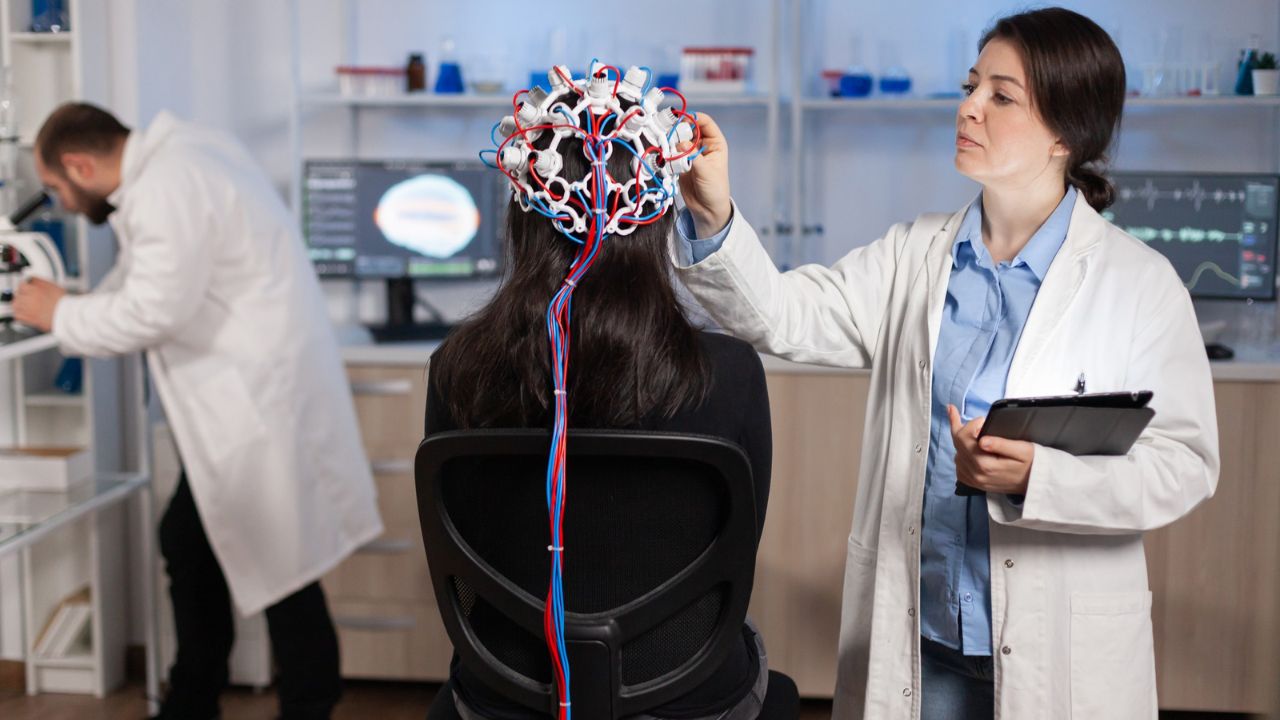
Brain scans look authoritative. Clean lines. Bright colors. Objective, scientific, beyond debate. But behind every image of a living brain sits a thicket of ethical questions that neuroscience is still struggling to answer. As brain imaging becomes more powerful, cheaper, and deeply embedded in research, medicine, and even courtrooms, the ethical stakes have grown right alongside it.
This isn’t a future problem. It’s a now problem.
Why Brain Imaging Raises Unique Ethical Concerns
Most medical tests measure something external—blood levels, organ size, visible injury. Brain imaging is different. It peers into the biological basis of thought, emotion, personality, and behavior. That makes it uniquely intimate.
When researchers scan a brain, they’re not just collecting data. They’re handling information that touches identity, agency, mental health, and potential future decline. According to the National Institutes of Health, neuroimaging research raises ethical issues that extend beyond traditional biomedical frameworks (https://www.nih.gov).
The core dilemma is simple: just because we can see something in the brain doesn’t mean we know what to do with that knowledge.
Informed Consent: How Informed Is “Informed”?
Informed consent is the ethical backbone of human research. But brain imaging stretches its limits.
Most participants are told scans will be used for research purposes, anonymized, and not interpreted clinically. Yet scans often reveal unexpected findings—tumors, aneurysms, structural abnormalities—known as incidental findings.
The question becomes: what should researchers disclose, and when?
If participants are warned about every possible discovery, consent becomes overwhelming and abstract. If they’re not warned enough, they may feel blindsided. The National Institute of Mental Health has emphasized the need for clear protocols around incidental findings, especially in neuroimaging studies (https://www.nimh.nih.gov).
There’s no universal standard. Ethics boards, institutions, and countries handle this differently—and that inconsistency matters.
Incidental Findings: Knowledge as a Burden
Incidental findings sound helpful in theory. Who wouldn’t want to know about a hidden brain abnormality?
But many findings are ambiguous. A small lesion might never cause symptoms. A subtle structural variation could be benign—or not. Once disclosed, that information can trigger anxiety, unnecessary testing, and lifelong labeling.
Researchers face an ethical tightrope. Withhold the information, and they’re accused of paternalism. Share it, and they may cause harm without clear benefit.
The National Library of Medicine has published extensive reviews showing that most incidental findings in brain imaging do not require intervention, yet their psychological impact can be significant (https://www.nlm.nih.gov).
Sometimes, ignorance really is less harmful.
Privacy, Data Security, and the Myth of Anonymity
Brain imaging data is often described as anonymized. In reality, complete anonymity is increasingly fragile.
High-resolution brain scans are biologically unique—more like fingerprints than lab values. As datasets grow and AI tools advance, re-identification becomes easier, especially when imaging data is combined with genetic or behavioral information.
Large open-science projects have accelerated discovery, but they’ve also raised new privacy concerns. Who owns brain data? How long should it be stored? Who gets access?
The U.S. Office for Human Research Protections has flagged neuroimaging as an area requiring heightened attention to data protection (https://www.hhs.gov/ohrp).
Once brain data escapes into the wild, you can’t take it back.
Vulnerable Populations and Power Imbalances
Many neuroimaging studies involve vulnerable groups: children, individuals with cognitive impairment, psychiatric patients, prisoners, or those with neurodegenerative diseases.
Consent in these contexts isn’t always straightforward. Can a person with dementia truly understand long-term data use? Can a child meaningfully assent to future applications of their brain scans?
There’s also the subtle pressure to participate. Patients may feel imaging is tied to care, even when it’s purely research. That blurred line between treatment and experimentation—known as therapeutic misconception—is a persistent ethical problem.
The World Medical Association’s Declaration of Helsinki, often cited in NIH-funded research, stresses additional protections for vulnerable populations in biomedical research (https://www.wma.net).
Predictive Imaging and the Ethics of Foreknowledge
One of the most ethically charged frontiers in brain imaging is prediction. Scans can increasingly identify risk markers for Alzheimer’s, Parkinson’s, psychosis, or developmental differences years before symptoms appear.
But what happens when there’s no cure?
Telling someone they’re at high risk for a neurodegenerative disease can affect mental health, employment, insurance, and life decisions. Without clear pathways for prevention or treatment, predictive knowledge can become a psychological burden rather than a benefit.
The National Institute on Aging has cautioned against premature disclosure of dementia risk based solely on imaging biomarkers (https://www.nia.nih.gov).
Foreknowledge sounds empowering—until it isn’t.
Neuroimaging, Bias, and Misinterpretation
Brain images carry an aura of objectivity, but they’re shaped by assumptions, algorithms, and statistical thresholds. Small methodological choices can produce big interpretive differences.
There’s also cultural and societal bias. Most imaging datasets are drawn from Western, educated, industrialized populations. Applying those “norms” globally risks mislabeling difference as dysfunction.
Media misrepresentation compounds the problem. Colorful brain images are often oversold as proof of causation rather than correlation. The American Psychological Association has warned against “neuro-realism,” where brain images are used to give undue credibility to weak claims (https://www.apa.org).
A scan doesn’t speak for itself. People speak for it.
Legal, Forensic, and Policy Implications
Brain imaging has crept into courtrooms, policy debates, and criminal justice research. Claims about impulse control, brain damage, or risk of reoffending increasingly lean on neuroimaging evidence.
This raises hard ethical questions. Should a brain scan influence sentencing? Responsibility? Competence?
The science is nowhere near deterministic enough to support strong legal conclusions, yet the images can be persuasive to judges and juries. Legal scholars have repeatedly cautioned against overreliance on neuroimaging in forensic contexts (https://www.ncbi.nlm.nih.gov).
When brain scans meet the law, the margin for misuse widens.
Ethics in the Age of AI and Big Neurodata
Artificial intelligence has turbocharged brain imaging research. Algorithms now detect patterns humans can’t see, clustering brains into subtypes and predicting outcomes.
But AI models inherit the biases of their data. They’re often opaque, making it hard to explain why a prediction was made. In medical ethics, lack of explainability is a serious concern—especially when decisions affect real lives.
The FDA has begun outlining ethical and regulatory expectations for AI-driven medical tools, including those based on neuroimaging (https://www.fda.gov). Oversight is evolving, but slowly.
Technology is moving faster than ethics committees can write guidelines.
Toward Ethical Neuroimaging: What Responsible Practice Looks Like
Ethical brain imaging research isn’t about stopping science. It’s about slowing down just enough to ask better questions.
That means clearer consent processes, realistic communication of uncertainty, stronger data protections, and genuine engagement with participants—not just as data sources, but as stakeholders.
It also means listening to patient communities, disability advocates, and neurodivergent voices who have historically been studied more than heard.
Why Ethics Is Not a Side Issue in Brain Imaging
Ethics isn’t a speed bump on the road to discovery. It’s the guardrail.
Brain imaging gives us unprecedented access to the biological roots of who we are. Used wisely, it can reduce suffering and expand understanding. Used carelessly, it can stigmatize, mislead, and harm.
The most important question in neuroimaging research isn’t “What can we see?” It’s “What should we do with what we see?”
Right now, the science is powerful. The responsibility needs to catch up.
FAQs:
Why is brain imaging considered ethically sensitive?
Because it reveals information tied to identity, cognition, and future health risk.
What are incidental findings in neuroimaging?
Unexpected abnormalities discovered during research scans unrelated to the study’s purpose.
Can brain imaging predict mental illness?
It can identify risk patterns, but predictions are probabilistic, not definitive.